





FACELIFT
A facelift is a surgical procedure designed to restore a more defined facial contour and reduce visible signs of aging. Before surgery, patients undergo a full medical assessment and consult with both a plastic surgeon and an anesthesiologist. These steps are essential to ensure the procedure is as safe as possible.
The main outcome of a facelift is a refreshed, more youthful appearance with improved facial proportions.
What Is a Facelift and Who Is It For?
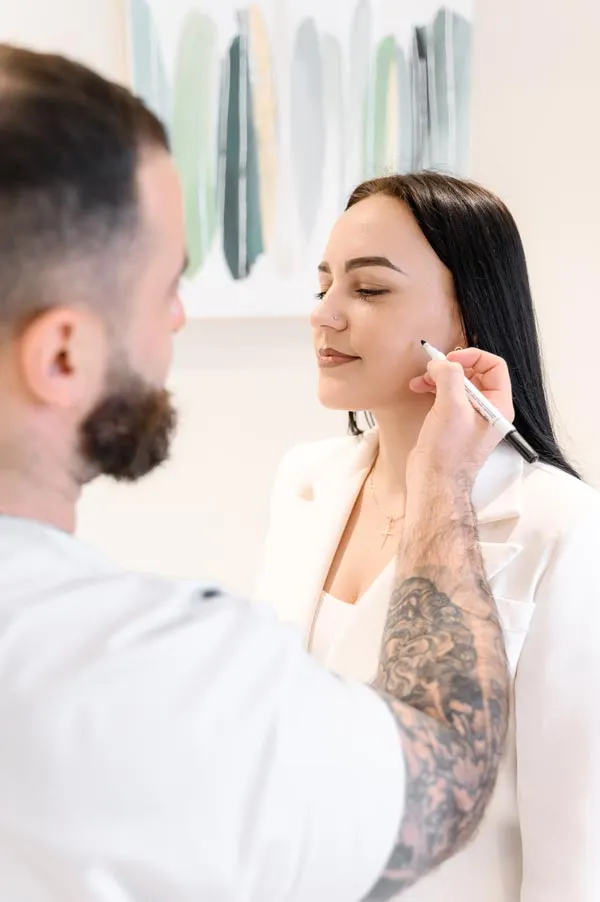
A facelift (rhytidectomy) is a surgical procedure — sometimes combined with minimally invasive techniques — that tightens the skin and underlying facial tissues. Its goal is to restore a smoother, more lifted facial contour.
A facelift in Lviv is typically recommended for people who notice:
- Sagging in the cheek area and the appearance of jowls in the lower face
- Deep wrinkles and folds, such as nasolabial lines
- Loss of a well-defined facial oval
- Loosening of the skin and soft tissues in the face and neck
Most patients are between 40 and 60 years old, but age is not the main factor. The key indicators are skin quality, tissue elasticity, and the degree of sagging.
When a Facelift Is Not Recommended
A facelift may need to be postponed or is not advised in the following situations:
- Acute infections
- Severe chronic medical conditions
- Blood clotting disorders
- Active inflammatory skin conditions on the face
- Pregnancy or breastfeeding
Types of Facelifts and Their Features
Modern aesthetic surgery offers several facelift techniques that differ in the extent of intervention, surgical approach, and recovery time. The choice of method depends on the degree of age-related changes, the area that requires correction, and the expected result.
Circular Facelift
A circular facelift is a comprehensive surgical procedure that lifts and tightens the tissues of the lower and middle face, as well as the neck. It helps restore a defined facial oval and correct pronounced age-related changes.
The procedure is performed under general anesthesia or combined anesthesia (sedation with local anesthesia). During surgery, the incisions are usually made along the hairline, in front of the ear, and behind the ear. Through these access points, the facial tissues are carefully separated, repositioned upward, and fixed in a new position. If necessary, deeper structures are also corrected, after which cosmetic sutures are placed.
The operation typically takes 2–4 hours.
Endoscopic Facelift
An endoscopic facelift is a minimally invasive procedure performed through several small incisions using an endoscope. Compared to traditional surgery, it is less traumatic and requires a shorter recovery period. It is most often used to correct the upper part of the face, including the forehead, brows, and cheek area.
In Lviv, this procedure is usually performed under general anesthesia or sedation. The surgeon makes several small incisions (about 1–2 cm), typically within the scalp. An endoscope — a thin camera-equipped instrument — is inserted through these openings, allowing precise visualization of the tissues. The facial structures are then lifted and fixed in a new position, and fine sutures are applied.
The procedure lasts approximately 1–2 hours.
Mini Facelift (MACS Lift)
A MACS lift is a minimally invasive procedure focused on lifting the lower third of the face. It uses short incisions and vertical suspension sutures to reposition soft tissues. It is most often recommended for patients aged 40–50 or those with early signs of facial ptosis.
The procedure is usually performed under local anesthesia with sedation. The surgeon makes short incisions in front of the ear, then lifts and secures the deeper facial tissues using vertical sutures. After that, cosmetic sutures are placed.
The procedure typically takes 1.5–2 hours.
Thread Lift
A thread lift is a minimally invasive technique that uses special biocompatible threads inserted under the skin to lift and support facial tissues.
It is performed under local anesthesia. The doctor places absorbable or non-absorbable threads under the skin using thin needles or cannulas. These threads have small barbs or cones that help secure the tissues in a lifted position. Once the threads are placed, the skin is gently repositioned to create a more defined contour.
The procedure usually takes 30–60 minutes.
Neck Lift
A neck lift (platysmaplasty) is a surgical procedure aimed at correcting age-related changes in the neck area, including excess skin and fat deposits. It is often combined with a facelift and helps eliminate a double chin and restore a clear jawline and neck angle.
The procedure is performed under general or combined anesthesia. Small incisions are made behind the ears or under the chin. The surgeon tightens or sutures the neck muscles, removes excess fat if needed, and re-drapes the skin. Fine sutures are then applied.
The operation usually lasts 1–2 hours.
SMAS Facelift
A SMAS facelift is a deep surgical lifting technique that targets not only the skin but also the superficial musculoaponeurotic system (SMAS), which supports facial structures. It can be performed using a classic surgical approach or with modern technologies such as ultrasound assistance. The result is long-lasting, often up to 10–15 years.
The procedure is performed under general anesthesia. The surgeon makes incisions along the hairline and around the ears, then works on the SMAS layer, lifting, repositioning, and fixing it with sutures. This approach allows for a more stable and natural-looking result.
The operation typically takes 2–4 hours.
Facelift: Recovery and Results
The recovery period after a facelift depends on the type of procedure and the extent of the surgical intervention. In the first few days after surgery, swelling, mild bruising, and a feeling of tightness are normal parts of the healing process.
The most noticeable swelling and bruising usually subside within 2–3 weeks. Stitches are typically removed 7–12 days after surgery. Most patients are able to return to work approximately 10–14 days after the procedure.
Initial results become visible after about 3 weeks. The final outcome of the facelift develops gradually over 3–6 months. During this time, the swelling fully resolves, tissues heal completely, and a natural, well-defined facial contour is achieved.
Why Choose Korona Clinic in Lviv?
Korona Clinic is known for its experienced specialists in aesthetic and plastic surgery and offers a range of facelift procedures in Lviv. We combine the expertise of highly qualified surgeons with modern medical equipment.
Our main priority is achieving natural-looking results without the “over-tightened” or artificial effect. Another advantage is the accessible pricing of facelift procedures, which includes full surgical support and attentive patient care throughout the hospital stay.
If you are interested in a facelift or other facial rejuvenation procedures, you can consult with our clinic’s specialists for detailed information. Appointments are available online or by phone: (068) 776 65 54; (050) 282 98 68.
PRICE


FAQ
The incisions are made in natural skin folds or within the hairline, so they are usually almost invisible after healing. Our plastic surgeons use cosmetic sutures and special techniques that help minimize scarring.
During the operation, the patient does not feel pain due to individually selected anesthesia. After the procedure, there may be mild pain, swelling, and a feeling of tightness in the tissues. These symptoms are controlled with painkillers and gradually subside over time.
The first results become noticeable after the swelling decreases, usually in about 2–3 weeks. The final effect appears once the tissues have fully healed and settled into their new position, typically within 3–6 months after surgery.
The results of a facelift generally last around 7–10 years, depending on the technique used, the patient’s age, skin condition, and lifestyle. Deep-plane techniques, such as a SMAS lift, may provide longer-lasting results. However, surgery does not stop the natural aging process; it only slows it down significantly.